


Further to the well-known French tradition of upsetting religious sensibilities, last month’s Olympic opening ceremony in Paris provided us with one of the most unique depictions of Jesus in art that Europe has ever produced. While many have attempted to identify a moral wrongness with what was probably a parody of Da Vinci’s Last Supper, I instead want to use this increased attention to talk about the Biblical wrongness certain other religious artistic depictions.
So, what does Christian art get wrong?
1. Adam and Eve
To begin at the beginning, take a look at the following painting by the German renaissance master Lucas Cranach the Elder:
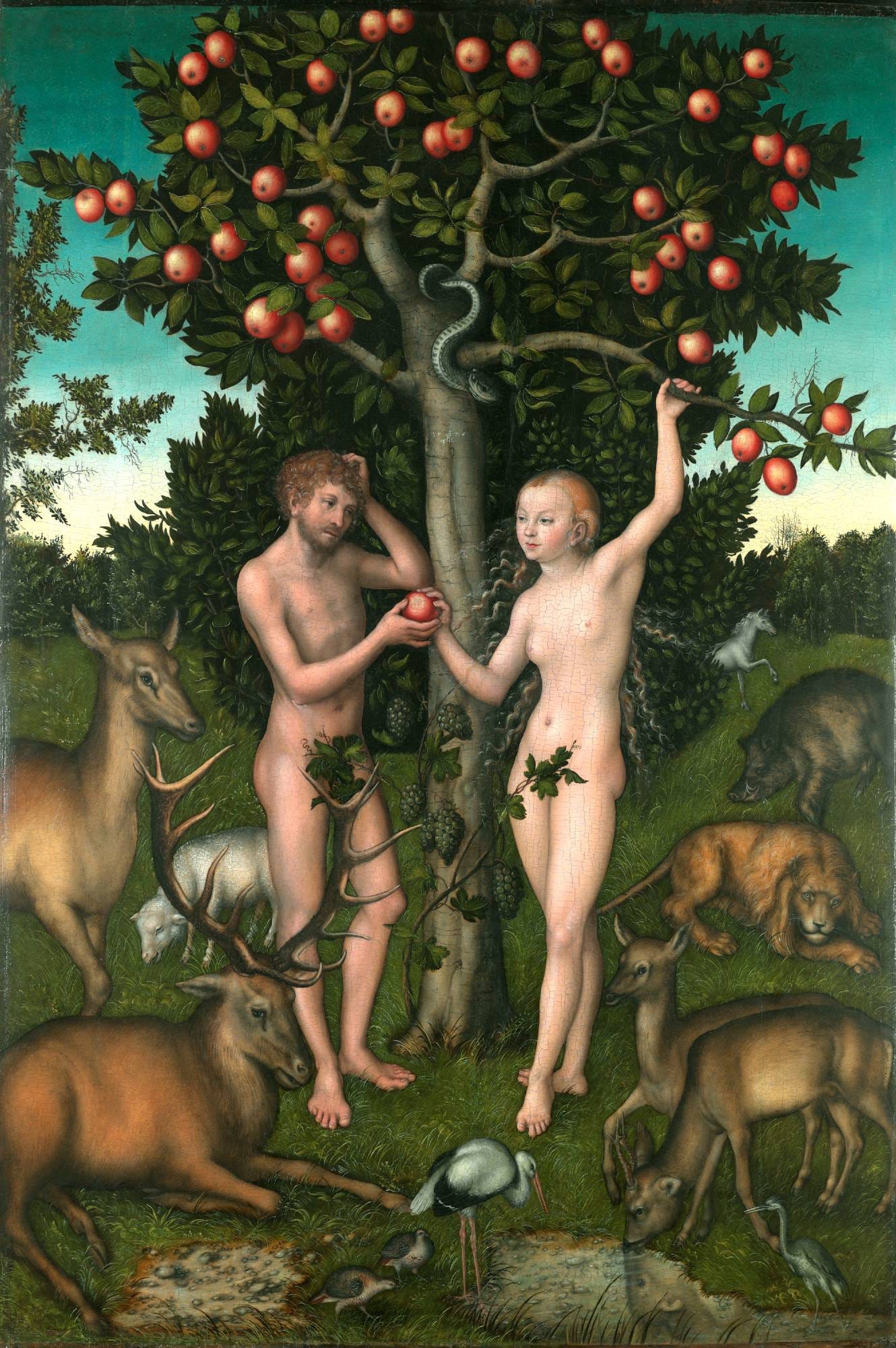
A familiar scene, but perhaps not an accurate one. The first question that might arise is this: why do the first humans have belly buttons? Adam was created from dust, and Eve from Adam’s rib, and so it is strange to see them depicted with the vestige of an umbilical cord.
It is possible, I suppose, that God simply created them this way. In any case, this is hardly the most egregious of theological oversights, but certainly worth a mention.
A second problem, then: why doesn’t the serpent have feet?
In the Genesis creation account, Eve is convinced by a crafty serpent to eat from the forbidden tree of the knowledge of good and evil. She then hands the fruit to Adam, who does the same. It is this moment which is captured by Cranach in the above.
After this original sin, God punishes all parties involved, including the serpent, whom he reprimands:
Because you have done this,
“Cursed are you above all livestock
and all wild animals!
You will crawl on your belly
and you will eat dust
all the days of your life.” (Genesis 3:14)
The clear implication is that before the fall, this serpent was not crawling on his belly. A natural reading is therefore that this creature had originally possessed feet (or perhaps wings) which were removed by God at the fall.
Some suggest that instead of having extra limbs, the serpent had previously simply had the ability to stand erect on its tail, which it lost as punishment for its sin. Thus John Calvin in his Biblical commentary:
“There will, however, be no absurdity in supposing, that the serpent was again consigned to that former condition, to which he was already naturally subject. For thus he, who had exalted himself against the image of God, was to be thrust back into his proper rank” (Calvin, Commentary on Genesis)
Yet, especially given that some snakes can still “stand up” to some degree, I am inclined to read the text as suggesting that the serpent once had feet. In doing so, I find myself in agreement with, amongst others, Flavius Josephus and Martin Luther.1
2. Doubting Thomas
John’s Gospel uniquely tells us that the Apostle Thomas, hearing of Jesus’ resurrection, was suspicious of the reports. “Unless I see the nail marks in his hands and put my finger where the nails were, and put my hand into his side,” he says, “I will not believe.” (John 20:25)
Jesus then appears to Thomas, and tells him to touch his wounds and stop doubting. Here is Caravaggio’s rendition:
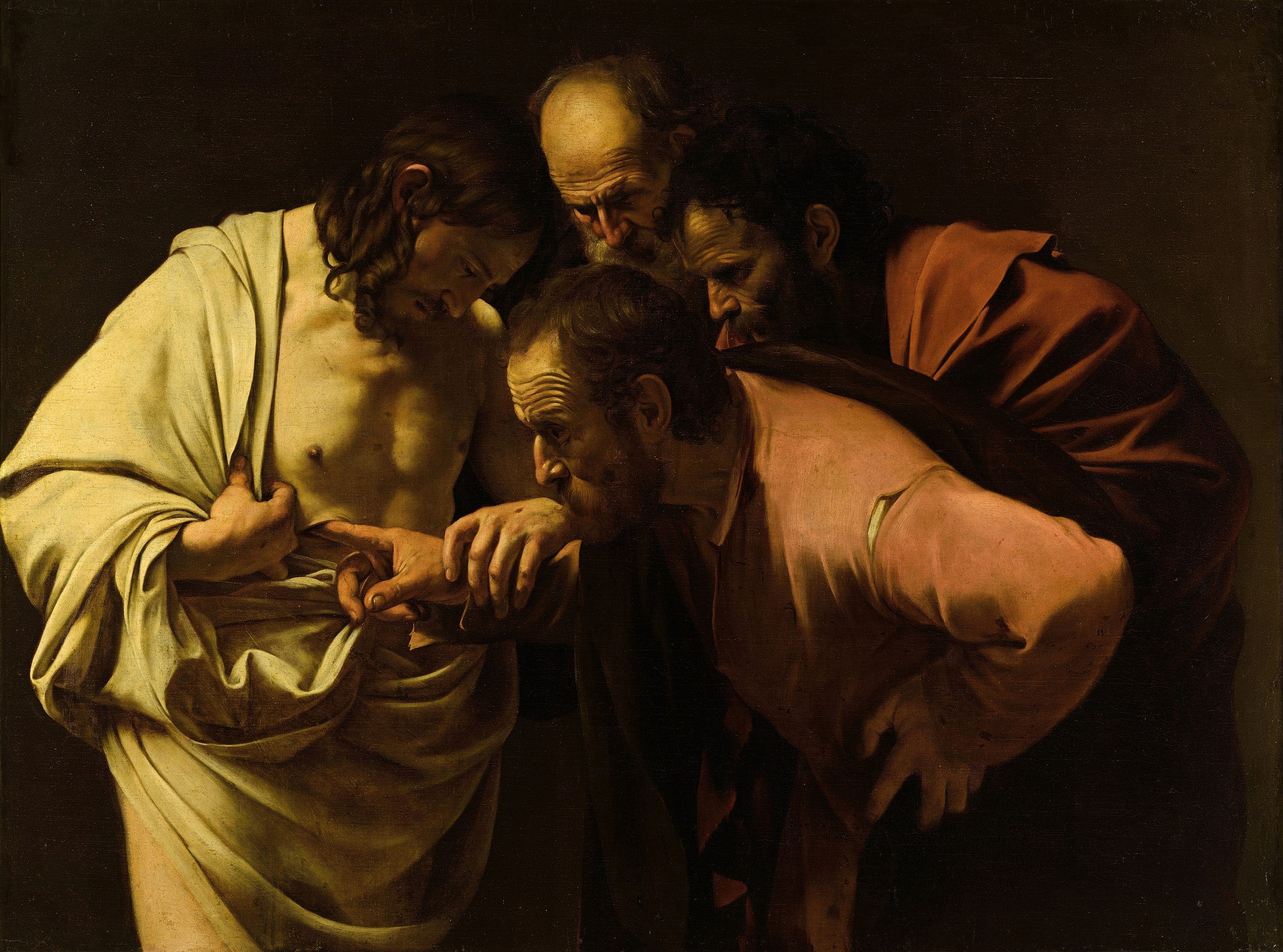
Inoffensive enough, no? So why does it make our list? Let’s revisit the text of John’s Gospel:
Jesus came and stood among them and said, “Peace be with you!” Then he said to Thomas, “Put your finger here; see my hands. Reach out your hand and put it into my side. Stop doubting and believe.”
Thomas said to him, “My Lord and my God!”
Then Jesus told him, “Because you have seen me, you have believed; blessed are those who have not seen and yet have believed.” (John 20:26-9)
Notice, reader: Thomas never touches Jesus’ wounds.
At least, we are not told that he does. It may seem implied in the text, but all we know for sure is that Thomas desires to touch Jesus, and that Jesus later offers to let him, at which point Thomas confesses that he is God incarnate.
There is a reading of this tale which has Thomas’ eagerness for empirical evidence dissolve in the event of meeting the person of Christ. As if Jesus says, “Go on then, if that’s what you really want!” and Thomas immediately realises the folly of his request. On this exegesis, the episode becomes an important theological indicator that Christianity is not about scientific proof of religious claims, but rather a relationship with Jesus.
(Notice also that Jesus says, “Because you have seen me, you have believed,” and in doing so does not mention having been touched or further probed in any way.)
We cannot rule out that the author of John’s Gospel intended to imply that Thomas physically touched Jesus, but we have no direct indication that he actually did.2 We simply don’t know. And especially when the debates surrounding the physicality of Jesus’ resurrection are taken into account, this makes the decision to present the event in this way—as almost all paintings of the scene do—not just an artistic choice, but a theological one, too.
3. Moses’ Horns
Take a look at Michelangelo’s famous sculpture of Moses, located in the church of San Pietro in Vincoli in Rome. What do you notice?
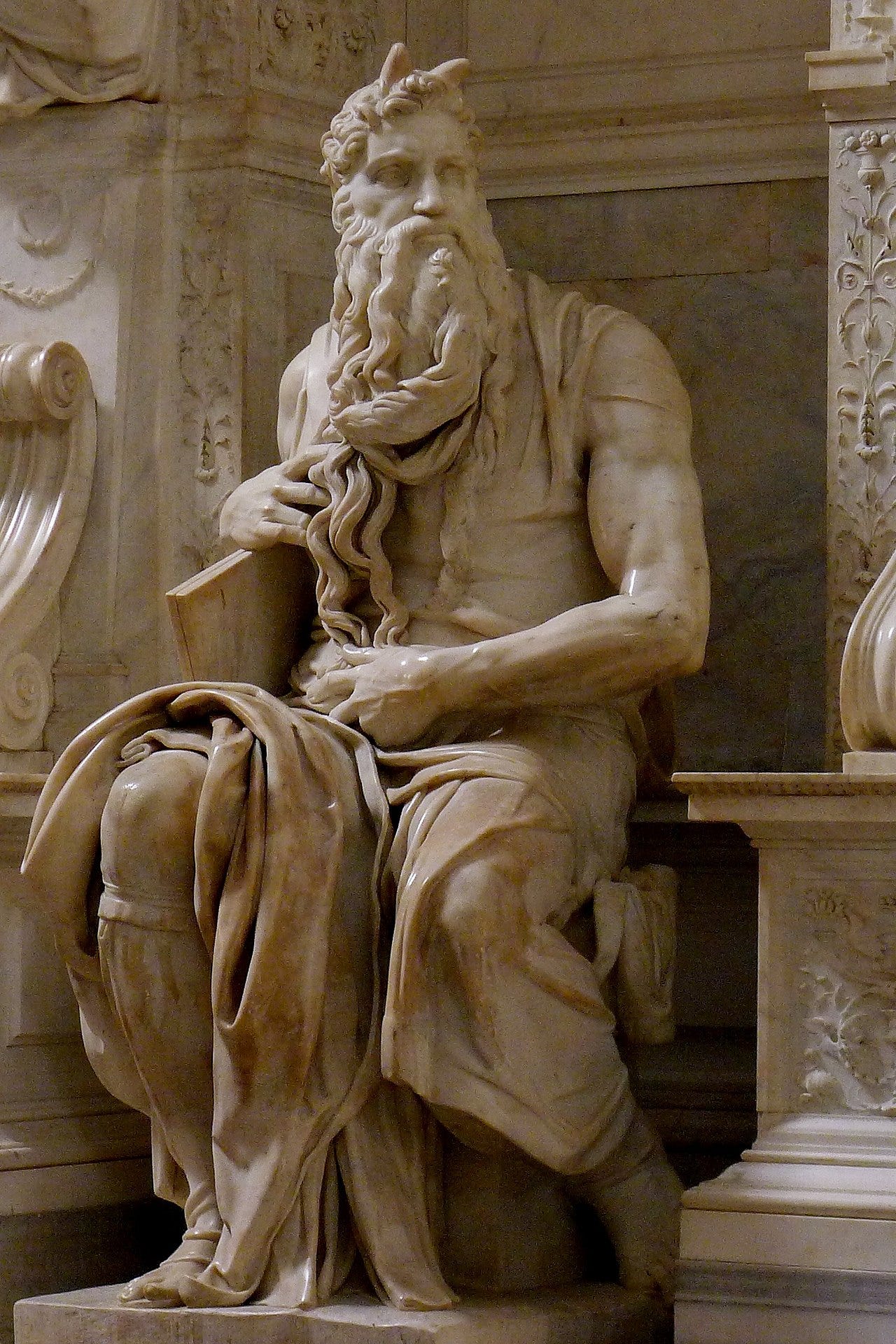
Aside from the apparent pump from carrying those stone tablets, the most notable anatomical feature of the prophet is his head. Or rather, what’s coming out of his head.
Yes, it is a pair of horns!
Why? Because Michelangelo’s sculpture was informed by the following passage from Exodus, describing the moments after Moses had spoken with God:
“When Moses came down from Mount Sinai with the two tablets of the covenant law in his hands, he was not aware that his face was radiant because he had spoken with the LORD.” (Exodus 34:29)
So, why the horns? It’s all in the word “radiant”. Remember, the Old Testament was written in Hebrew, and so any English version we read will be subject to editorial translation.
The word translated here by the NIV as “radiant” is קָרַ֛ן, or “qaran”, which can have multiple meanings depending on the context.
Literally, it means a horn or antler. Thus in Psalm 69 we read,
“This will please the Lord more than an ox,
more than a bull with its horns and hooves…” (Psalms 69:31)
The word for “horns” here is that same qaran. But it can also mean a ray or beam of light, and so where the word is used in Exodus it is variously translated:
“Moses did not know that the skin of his face shone because he had been talking with God.” (ESV)
“that Moses wist not that the skin of his face shone while he talked with him.” (KJV)
“he was not aware that his face was radiant because he had spoken with the LORD.” (NIV)
In the 4th Century Saint Jerome produced a Latin translation of the Bible which is known as the Vulgate. It was later affirmed by the Catholic Church as the official Latin version. In it, Jerome translates this passage from Exodus as,
“Cumque descenderet Moyses de monte Sinai, tenebat duas tabulas testimonii, et ignorabat quod cornuta esset facies sua ex consortio sermonis Domini.” (Vulgate)
Thus karan becomes cornuta, the Latin word for “horned”, and the Catholic Church’s approved Latin translation of the verse would read something like,
“Moses did not know that his face was horned because he had been talking with God.”
Given that Moses is said shortly afterwards to have put a veil over his face whilst speaking to the Israelites because of the state of his face—not to mention the sheer strangeness of Moses developing horns as a result of speaking with God—it is fair to assume that Jerome was incorrect in his interpretation of the Hebrew.
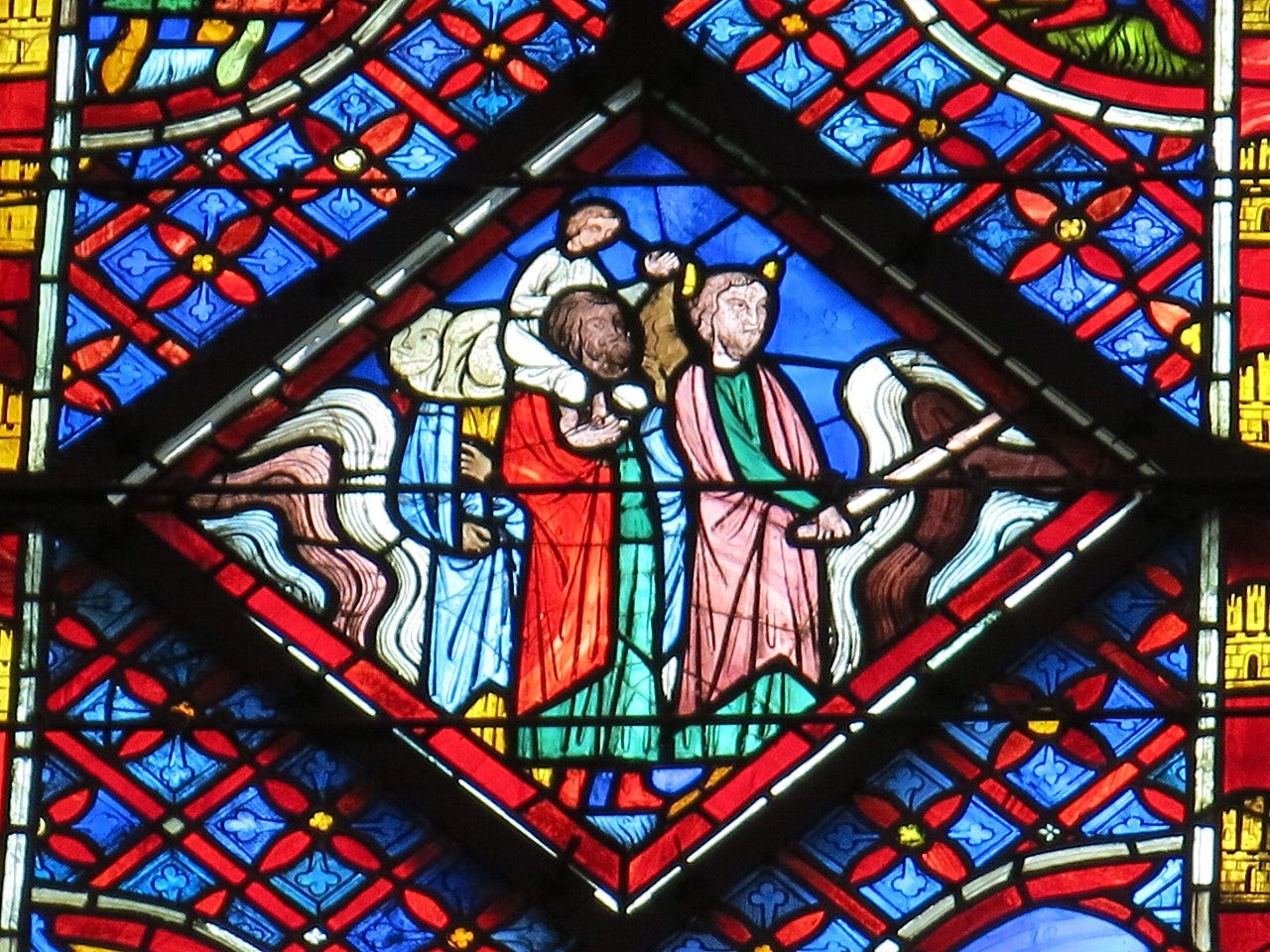
So, this strange motif of a horned Moses in Christian art is due to a mistranslation of the Bible.
Honourable Mention: Jesus’ Physical Appearance
What did Jesus really look like?
I recently spent an hour with Dr. John Nelson on my podcast discussing this question. He drew my attention to a 2018 study which found an “egocentric bias” in the American public’s imagination of what God looks like.
That is, asked to choose which images most resembled God, attractive people pick attractive faces. Black people pick black faces. Old people pick old faces. And so on.
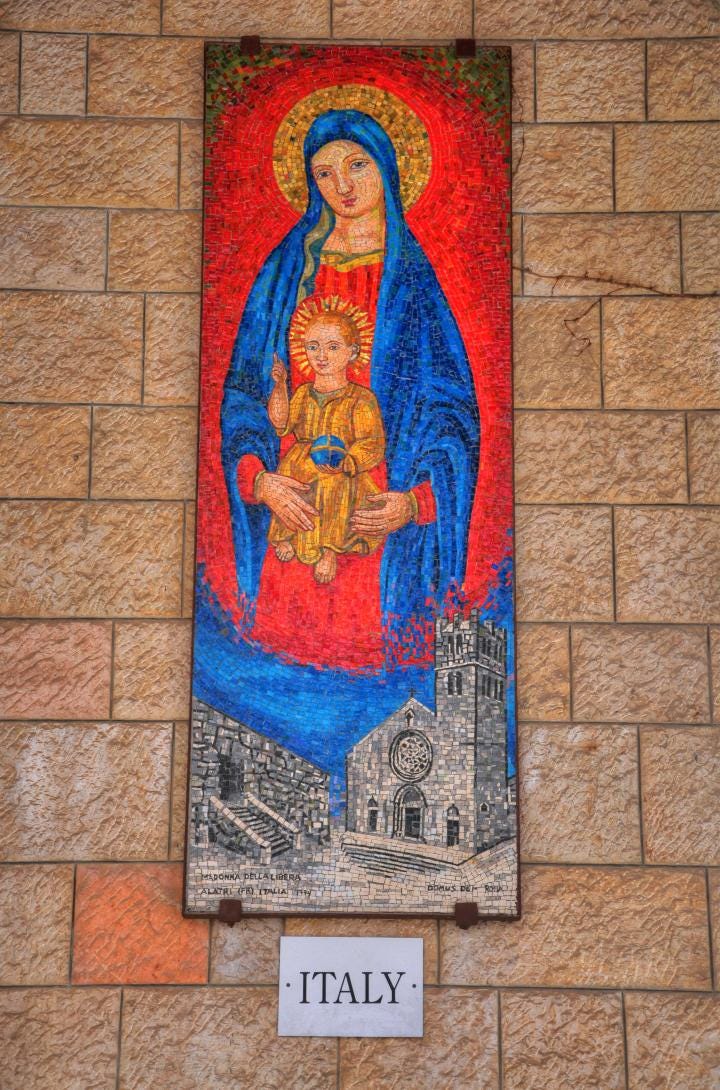
Last year I visited the Basilica of the Annunciation in Nazareth, Jesus’ hometown. In the courtyard, there are 43 mosaics of Mary holding the newborn Christ, sent in from countries across the world. The most noticeable feature of this gallery is this egocentric bias applied to the Marian devotions.
Thus alongside this caucasian Christ from Italy…
You will also find a Thai Christ…

And a Chinese Christ:

This helps to demonstrate how, in religious art, Jesus is often depicted in such a way that is more sensitive to the artist’s desire to see themselves in the Christ than to the historical data surrounding Jesus’ appearance.
Putting ethnicity aside, we may consider some other factors. Jesus’ physical characteristics are not described in any detail in the Gospels, and so there is no direct scriptural basis for determining features like his height, build, hair and beard length, and clothing. But we do have some clues.
Consider how Jesus is often depicted in a long and flowing robe:
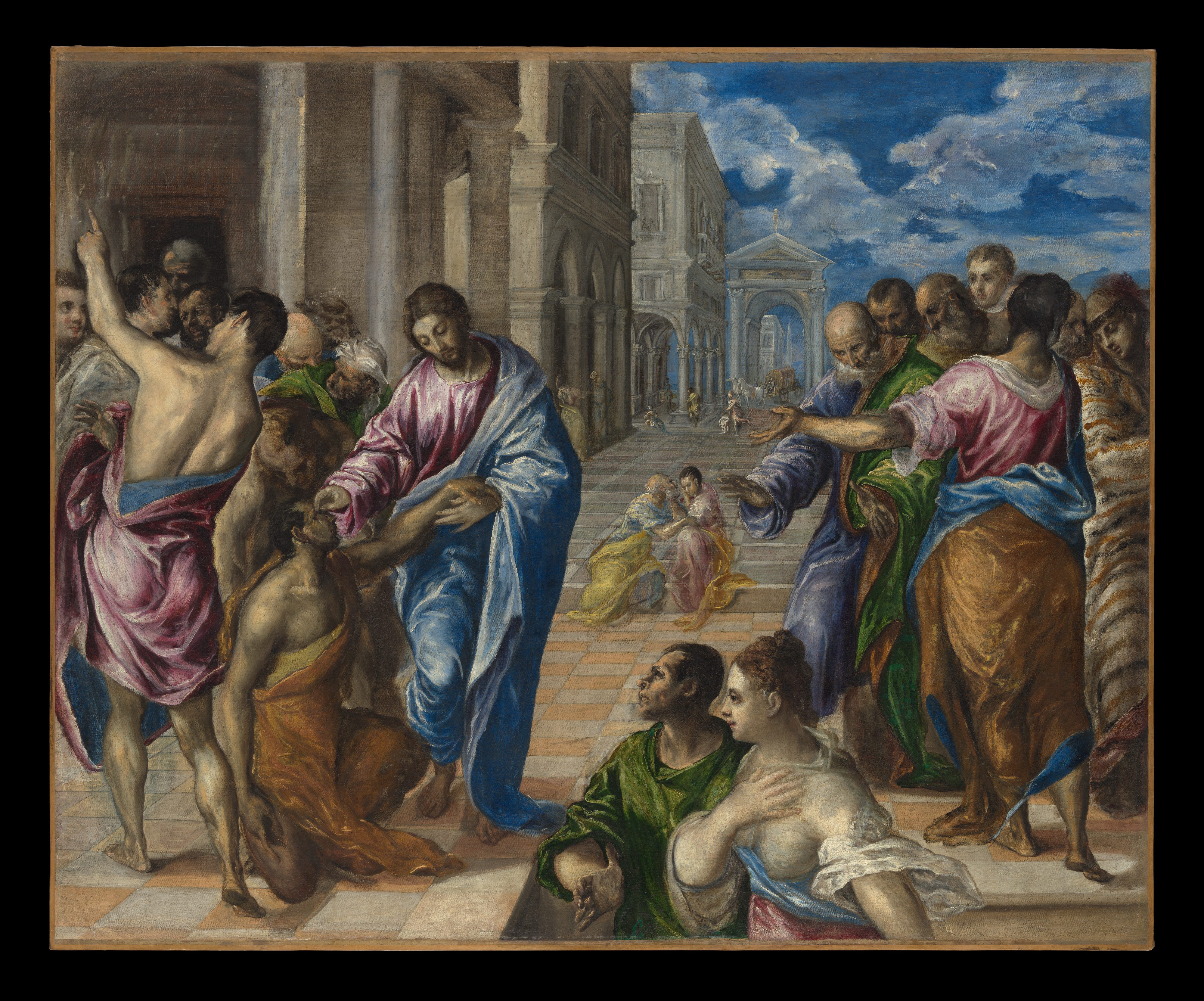
It is unlikely that this is how he dressed during his earthly ministry. Take a look at Luke 20:46:
“Beware of the teachers of the law. They like to walk around in flowing robes and love to be greeted with respect in the marketplaces and have the most important seats in the synagogues and the places of honor at banquets.”
Jesus is more likely to have worn a tunic that fell just below the knees. “It is an irony,” writes Biblical historian Joan Taylor, author of What Did Jesus Really Look Like?, “that the very clothing Jesus defines as self-aggrandizing and different to his own is the clothing that artists have dressed him in for some 1600 years.”3
There is also some dispute about Jesus’ hair, given that despite artists commonly depicting it as long and flowing beneath the shoulders…
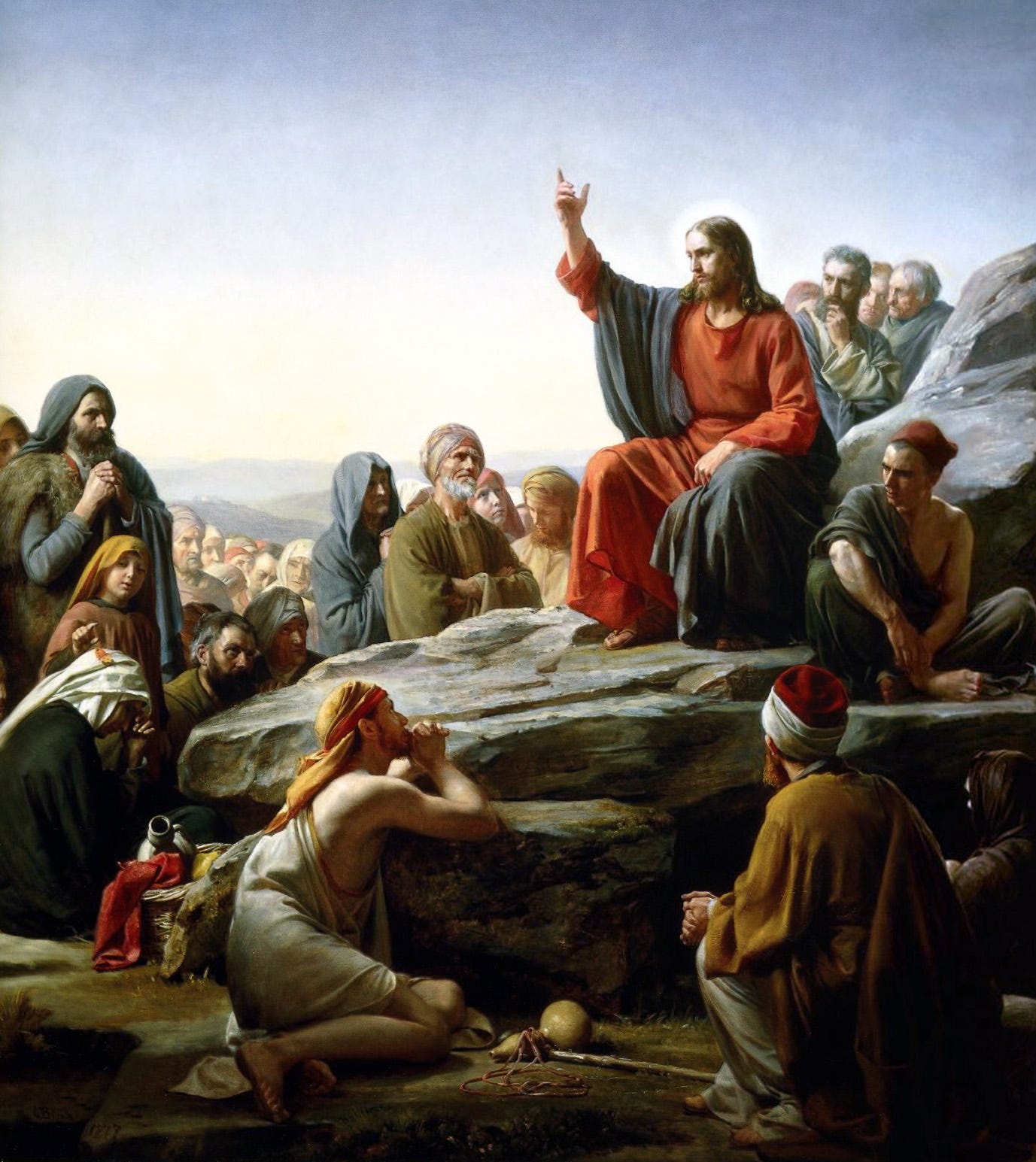
Paul appears to suggest in 1 Corinthians that long hair on a man is something to be ashamed of:
“Does not the very nature of things teach you that if a man has long hair, it is a disgrace to him, but that if a woman has long hair, it is her glory?” (1 Corinthians 11:14-5)
This is something he is unlikely to have said if Jesus had been known for having long hair.
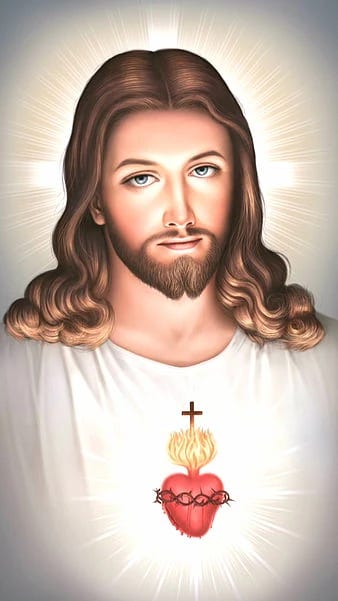
We can never know exactly what the historical Jesus looked like, but he probably didn’t look like this:
I never thought I would reference Answers in Genesis, but they do have a helpful table of historic views on this issue at https://answersingenesis.org/genesis/garden-of-eden/did-the-serpent-originally-have-legs/.
When I consider whether Thomas “actually did” touch the wounds, I of course do not mean to suggest that the event actually took place, but mean rather to discuss whether or not the character does this in the story.
Joan Taylor, What Did Jesus Really Look Like? Bloomsbury, 2018, p. 171.
The movie The Book of Clarence pokes fun at the Caucasian Jesus trope!
Brilliant, brilliant essay. Congratulations. “Point 1. Adam and Eve” is the most interesting one. But the myth has another interpretation that you are not considering. The ancient Hebrews were, most probably, proto-Darwinian. Genesis includes the creation of Adam, and then Eden. Adam and Eve did have belly buttons, but they did not look quite human (as Lucas Cranach the Elder paints them).
The Bible describes the first hominins to become human but not the only Homo erectus individuals on Earth. “Their eyes were opened”. Interpreting the myth like that makes a lot more sense. It is the beginning of consciousness and the onset of humanity. That perspective explains many other nonsensical Christian mysteries. Like Cain’s wife, and Cain building a city in the land of Nod, East of Eden. Adam gave names to the animals, and Eve talked to him. Language. That is the beginning of meta cognition (the emergent human addition to sentience).
I have a theory of consciousness (included in Kuhn’s Landscape). It is based on language, as is the myth (and Wittgenstein’s Tractatus).
Thank you for the article.